Simvoly White Label: Platform, Branding and Agency Fit
Simvoly’s white-label product is designed for agencies, marketers and SaaS operators that want to offer websites, funnels and related business tools under their own brand.

What is Simvoly White Label?
Simvoly White Label is a reseller-oriented version of the platform that lets an agency or SaaS operator present the builder and related tools under its own brand. Current official materials describe a 100% white-label DIY platform, platform skins, client projects and the ability to create your own customer-facing plans.
The product is materially different from simply building client sites on a normal Simvoly subscription. The white-label model adds the business layer needed to package a platform experience for customers.
That distinction matters for evaluation. A freelancer who only builds and hands off occasional sites may need a different setup from an agency that wants recurring software revenue and a branded login experience.
Branding the platform experience
Simvoly’s white-label materials emphasize platform skins and branding controls. The goal is for customers to interact with an environment that reflects the reseller’s identity rather than a generic third-party builder.
Branding should go beyond replacing a logo. Define colors, support language, plan names, onboarding messages and the parts of the experience where your agency promises responsibility. Consistency helps the platform feel intentional.
Do not promise that every underlying third-party service becomes invisible. Payment processors, domains, email infrastructure or external integrations can have their own branding and terms, so verify the complete customer journey.
How the white-label operating model works
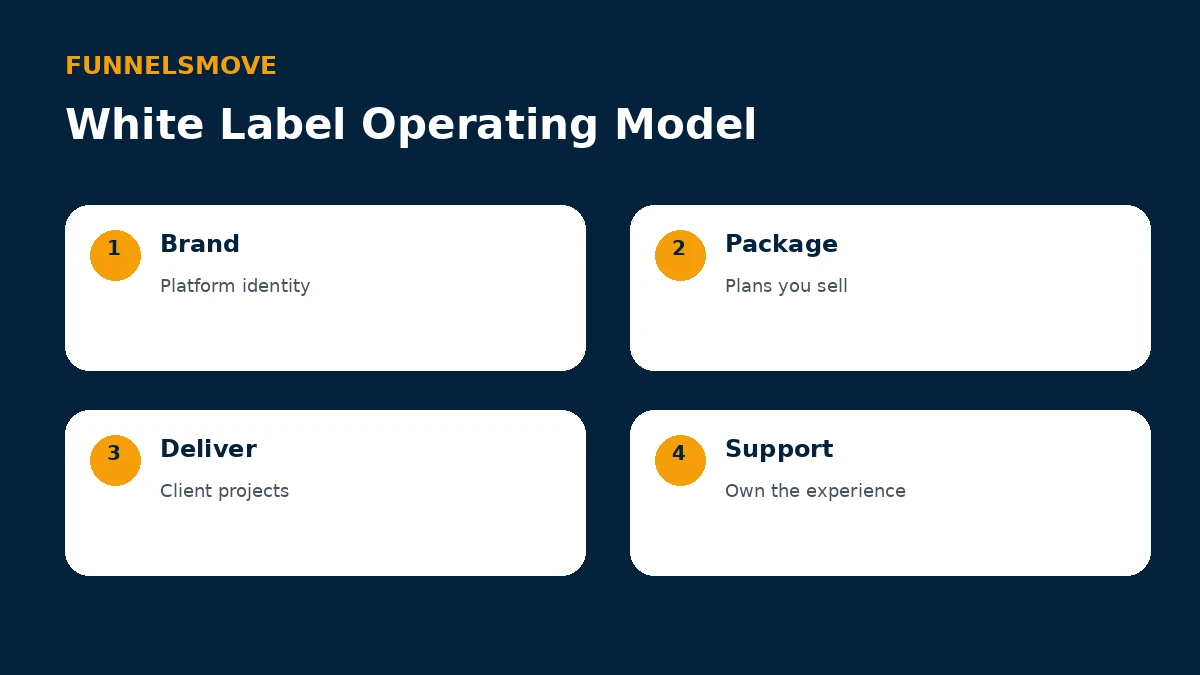
Think of the model in four layers: brand the platform, package what customers can buy, deliver client projects, and support the resulting experience. The software enables the model, but the reseller still owns the commercial and service decisions.
Before launch, document who handles billing questions, domain setup, design requests, technical issues and cancellations. A branded platform creates customer expectations that should be matched by a clear operating process.
Two common agency strategies
Simvoly’s current white-label website-builder materials describe two broad strategies: an agency can build efficiently for clients using reusable templates, or it can let customers select designs and build more independently inside the branded platform.
The first model behaves more like productized web services. Standardized templates and processes can reduce production time while the agency retains more control. The second behaves more like SaaS, where onboarding and self-service education become more important.
Many agencies will combine the two. Higher-value clients may receive done-for-you implementation while smaller customers use a more standardized self-service plan.
Client projects and capacity
Current white-label tiers include a base platform plus a project allocation, with additional projects available at tier-dependent prices. Project resources can include websites, funnels, products, communities, marketing subscribers, bandwidth, admins and other capabilities depending on the project package.
This structure means agency economics are not captured by the platform fee alone. You need to estimate the number and type of client projects, their add-ons and the support cost required to keep them successful.
For detailed current numbers, use our Simvoly white-label pricing guide.
Creating customer-facing plans
Simvoly’s white-label getting-started material includes configuring your own pricing plans as an early setup step. That allows a reseller to package platform access according to its market rather than simply exposing Simvoly’s retail plan names.
Good packaging begins with a narrow customer profile. Decide what that customer needs in websites, funnels, ecommerce, marketing and support, then build a plan around the outcome.
Avoid creating too many tiers at launch. Complexity makes sales and support harder, especially when add-ons and project limits already introduce variables.
Affiliate and education features
Current WL Advanced and WL Ultimate descriptions include an affiliate-program capability for the reseller’s own white-label business. They also list non-branded academy content that can be used under the reseller’s brand.
These features can support customer acquisition and education, but they do not replace a go-to-market strategy. Define commission rules, attribution, payout processes and customer support before inviting affiliates.
Educational content is similarly most useful when integrated into onboarding. Customers still need guidance that reflects the plans and services your business actually sells.
Who is the white-label product for?
The strongest fit is an agency, marketer or SaaS founder that wants recurring revenue from a branded website-and-funnel platform and is prepared to operate the customer relationship around it.
A conventional small business buying software for its own marketing usually does not need white label. The standard Simvoly plans are the more relevant comparison for that use case.
An agency that only builds a handful of bespoke sites should model whether the platform layer creates enough operational or recurring-revenue value to justify the additional complexity.
Operational questions before launching
White label changes your role from software user to service operator. Customers may contact your brand when the builder, billing, domain or integration behaves unexpectedly. Decide what you support directly and when an issue needs escalation.
Review contracts, refund rules, tax and invoicing responsibilities for your jurisdiction. The platform can provide technical billing features, but your business remains responsible for its commercial and legal obligations.
Also plan for data exports, account handoff and cancellation. A clear offboarding process protects both the agency and its clients.
Bottom line on Simvoly White Label
Simvoly White Label is best evaluated as a business platform, not merely a feature upgrade. Its value depends on whether your agency can package, sell and support the underlying capabilities profitably under its own brand.
Model customer acquisition, project cost, add-ons and support effort before launch. If the economics work, the platform can provide a foundation for both productized services and a more self-service SaaS model.
A practical white-label launch sequence
Begin with one target customer and one offer. Configure the brand, create a small number of customer plans and build the templates that support that offer. A narrow launch is easier to price, document and support than a platform that promises every feature to every client.
Next, create the customer onboarding journey. Decide how a new account is provisioned, which template it receives, who connects the domain and what training appears first. Test the experience from a fresh customer account rather than only from the agency administrator view.
Set up billing and support processes before recruiting customers. Test successful subscriptions, failed payments, upgrades, downgrades and cancellations. Define response times and an escalation path for issues that require vendor assistance.
After the first clients are active, measure support volume and project cost. Those numbers should influence the next plan revision. A reseller business becomes healthier when packaging is informed by actual operating effort rather than assumptions.
Explore Simvoly
Review the current platform, trial and plan details directly before deciding whether it fits your workflow.