Simvoly White Label Pricing: Plans and Costs
Simvoly currently prices its white-label platform separately from standard website plans, with three platform tiers plus project-level costs and optional add-ons.
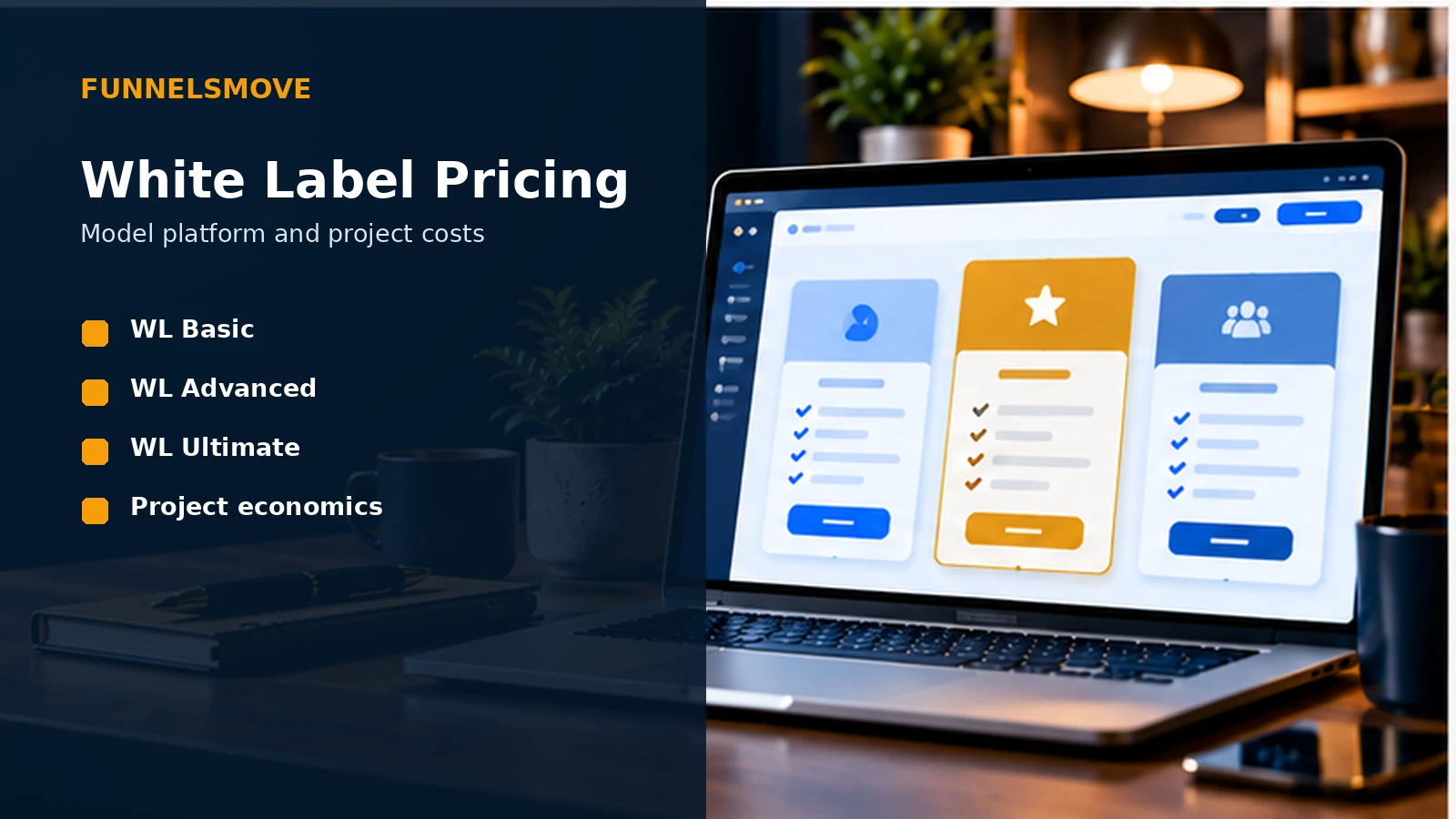
Simvoly white label pricing at a glance
As of September 28, 2026, Simvoly’s current main pricing and white-label-platform pages list WL Basic at $59/month billed annually or $69 month-to-month, WL Advanced at $129/$149, and WL Ultimate at $429/$497. Each tier includes one base project with different capacity, and additional projects start at different prices.
These figures are for the current white-label platform, not Simvoly’s standard website-and-funnel plans. They should also not be confused with older Simvoly pages that may still appear in search results with legacy white-label tier names or prices.
Pricing changes. Confirm the live checkout or current official pricing immediately before making a financial commitment.
WL Basic
WL Basic currently includes one project with two websites and ten funnels, plus unlimited products, pages and popups. The current main pricing page also lists one community, five appointment operators, five hosted videos, two admins, 500 marketing subscribers and a 100GB bandwidth pool for that included project.
Additional project pricing starts from $8 per month on WL Basic, with the actual project cost depending on the package selected for that client.
This tier can make sense for an agency validating the white-label model before it needs the broader capacity and reseller features of higher tiers.
Model the cost in four layers
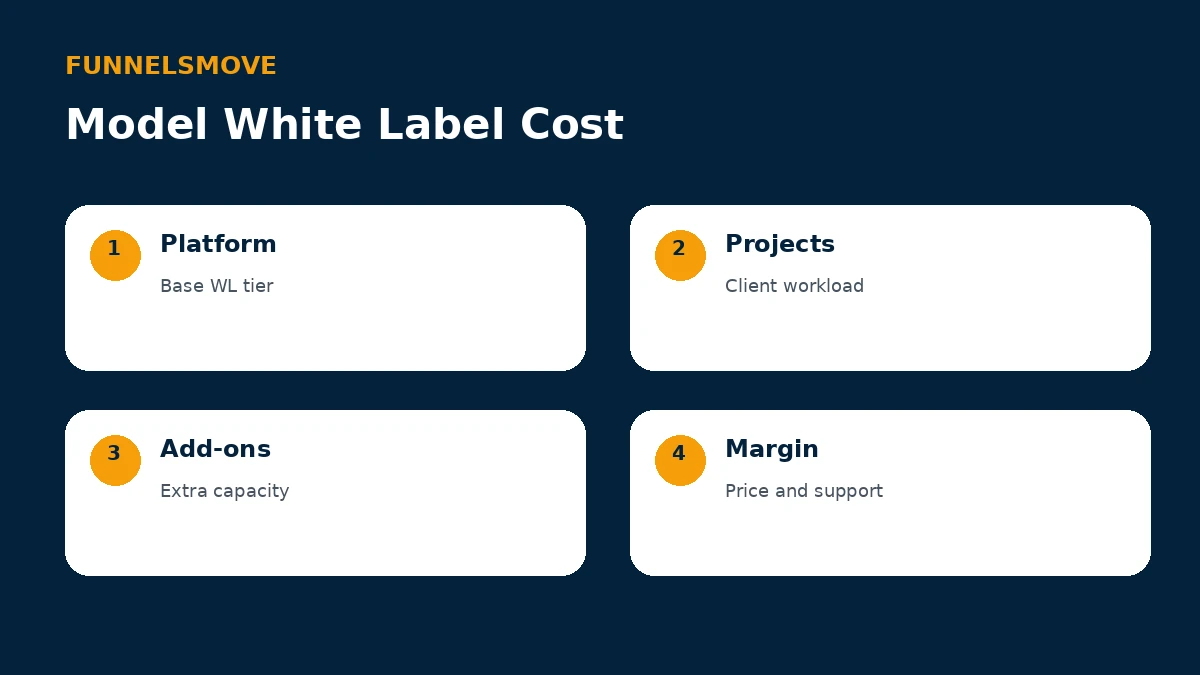
Start with the base white-label platform fee. Then estimate client project costs, add the capacity or feature add-ons those projects need, and finally include your own support and delivery expense. Margin only becomes meaningful after all four layers are modeled.
Do not price client plans by simply adding a percentage to Simvoly’s platform fee. Your business also pays for onboarding, support, payment processing, sales, design work and administrative time.
WL Advanced
WL Advanced is currently listed at $129 per month billed annually or $149 month-to-month. The current main pricing page describes one included project with five websites and unlimited funnels, unlimited products/pages/popups and communities, ten appointment operators, 50 hosted videos, ten admins, 2,500 marketing subscribers and 200GB of bandwidth.
Additional projects start from $7 per month on this platform tier. Simvoly also lists platform affiliate functionality and non-branded academy material on WL Advanced.
The broader included capacity can suit an agency that has moved beyond testing and wants more room inside the base project or intends to use the reseller-specific marketing features.
WL Ultimate
WL Ultimate is currently listed at $429 per month billed annually or $497 month-to-month. Its included project is described with unlimited websites and funnels, unlimited products/pages/popups, appointment operators, communities and hosted videos, plus 20 admins, 10,000 marketing subscribers and a 1TB bandwidth pool on the current main pricing page.
Additional projects start from $5 per month at this platform tier. The lower starting project price does not by itself make Ultimate economical; the much higher base fee needs enough client volume or operational value to justify it.
High-volume agencies should model realistic project mix rather than assuming every customer needs the largest project package.
Additional project pricing
Simvoly’s white-label pricing uses both a platform tier and project packages. The current pricing table shows additional project starting prices declining from WL Basic to Advanced to Ultimate, while richer project packages cost more.
This is important because the base subscription is only part of cost of goods. Ten lightweight client projects and ten ecommerce-heavy projects can have very different economics even on the same white-label tier.
Create a spreadsheet with expected clients by package, monthly project cost, add-ons and churn assumptions before setting retail prices.
Add-ons and variable costs
Current white-label materials list add-ons for ecommerce, marketing subscribers, communities, additional websites, additional funnels, video hosting and additional admins. Which add-ons are relevant depends on the client project and platform tier.
Payment processing, domains, external integrations and your own support stack may create additional costs outside Simvoly. Include them when calculating gross margin.
Marketing subscriber capacity deserves particular attention for clients with growing lists because email volume and subscriber allowances can change project economics.
Annual versus monthly billing
Annual billing lowers the advertised effective monthly platform price, but it also increases commitment. A new reseller may prefer to validate demand and operations before optimizing solely for the annual discount.
When comparing tiers, use the same billing basis. Mixing an annual WL Basic figure with a month-to-month Advanced figure makes the gap look larger than it is.
If you bill clients annually, consider how refunds, cancellations and project downgrades interact with your own platform commitment.
Why you may see different white-label prices online
Some older Simvoly pages indexed by search engines still display legacy white-label structures such as WL Growth or WL Pro and different pricing. Meanwhile, Simvoly’s current main pricing page and current white-label-platform page consistently show WL Basic, WL Advanced and WL Ultimate.
For this guide, FunnelsMove uses the current main pricing sources and dates the figures. If an older page conflicts with the current checkout, treat the current official purchase path as the relevant source.
This is also why screenshots from old reviews should not be used as a long-term pricing reference.
Which white-label tier should you choose?
WL Basic can be a lower-risk starting point for validating the reseller model. WL Advanced can make sense when its included capacity, affiliate functionality and project economics match a growing operation. WL Ultimate is a scale decision that should be justified by client volume or the value of its higher included capacity.
There is no universal cheapest tier because project mix matters. Model the same expected client base under each platform tier and compare total monthly cost.
Read our Simvoly white-label guide for the operating model before choosing solely on price.
Bottom line on white-label pricing
Simvoly white-label pricing has two major cost layers: the platform subscription and the projects you provision for customers. Add-ons and your own operating costs create additional layers.
Use current official pricing, model a realistic project mix and price your customer plans around sustainable margin and support—not just the advertised base subscription.
Example reseller cost scenarios
An agency validating demand may prefer WL Basic because the base commitment is lower. If its customers use lightweight project packages, the agency can learn onboarding and support before moving to a more expensive platform tier. The trade-off is that project pricing starts higher and the included base project has less capacity.
A growing reseller should compare WL Advanced against the same projected client base, not against an empty account. Lower starting project prices, broader base-project capacity and the included reseller features may change total economics once enough customers are active.
WL Ultimate should be modeled as a scale tier. Its higher base subscription can make sense only when the business extracts value from the larger included project, lower starting additional-project cost or other capacity. A small reseller should not assume the highest tier creates the highest margin.
For every scenario, include churn. A client who cancels may leave a project cost, support obligation or migration task for part of the billing period. Conservative modeling produces a more useful margin estimate than assuming every account remains active indefinitely.
Explore Simvoly
Review the current platform, trial and plan details directly before deciding whether it fits your workflow.