Kartra vs Shopify: Funnels and Commerce
A campaign checkout and an online storefront are not interchangeable. Kartra vs Shopify comes down to the shape of your catalog, how shoppers find products, and what happens after a purchase. A creator selling a small number of offers may prioritize nurturing; a retailer handling variants, inventory and fulfillment needs a different foundation.
Quick comparison and decision
Kartra is the stronger candidate for a small offer catalog built around opt-in pages, sequences and digital-product delivery.
Shopify is the more natural starting point for a merchandise storefront with product variants, inventory and shipping workflows.
Map one real order from discovery through fulfillment before deciding which platform should own the checkout.
What each system is designed to own
Kartra organizes a sales campaign around pages, leads, messages, checkout and post-purchase actions. Shopify organizes a merchant operation around products, collections, storefront, orders and commerce channels. Neither product's marketing language tells you whether it covers your specific operational edge cases.
Compare the customer journey
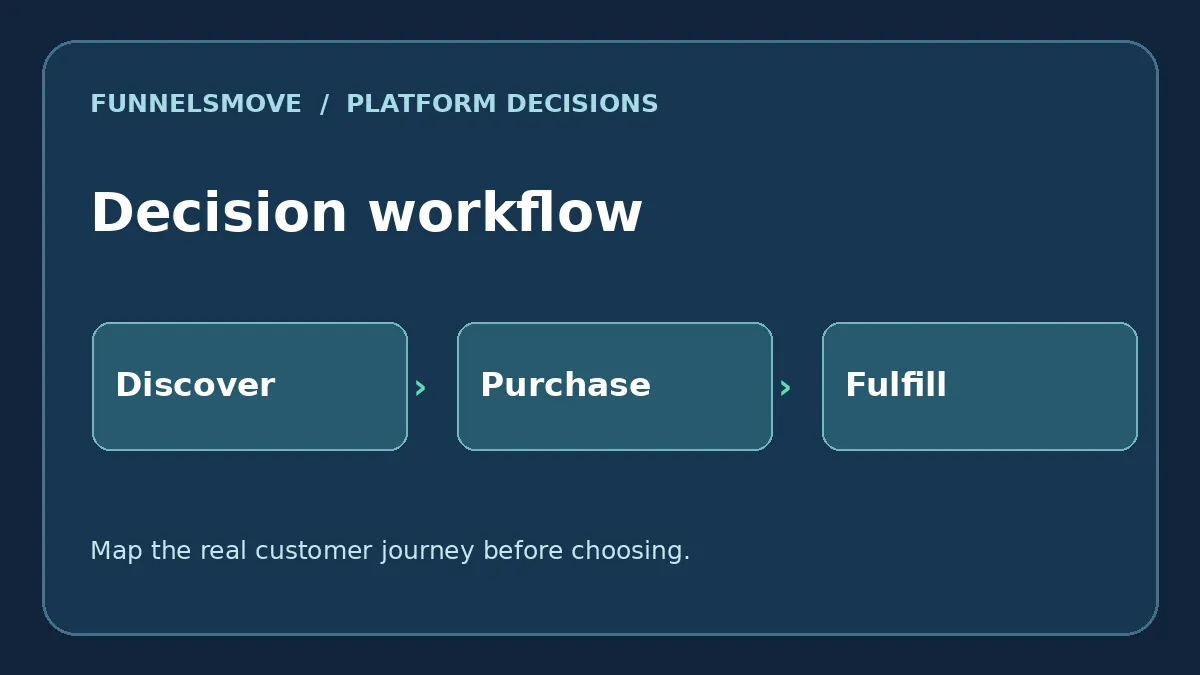
Imagine a visitor arriving from a paid social ad. A Kartra-led journey might offer a lead magnet, segment a contact, present a paid workshop and unlock a membership. A Shopify-led journey might let a shopper browse a collection, select a size, pay, receive shipping updates and return to manage an order. The difference becomes clear when you write the actual steps.
Before comparing vendor feature lists, define the primary user, the conversion or service outcome, and the staff member responsible for daily upkeep. Record the tasks that must work on day one, the tasks that can be added later, and the failure that would make a platform unsuitable. This makes the comparison testable rather than a contest of marketing claims.
Catalog, variants and inventory
A store with many SKUs needs variant-level availability, stock adjustments, shipping rates, tax handling and a dependable order-management routine. Shopify's commerce tools are designed around that model. Kartra can sell physical products through its product checkout, but sellers should verify inventory and fulfillment requirements rather than assume a campaign checkout replaces a dedicated store backend.
Checkout and post-sale delivery
Kartra's product setup connects payment collection with post-sale actions such as a membership grant or file download. Shopify supports online-store checkout and order management; digital delivery or specialized nurturing may depend on the merchant's chosen apps and configuration. Test refunds, failed payments and the customer's receipt and access experience in both systems.
Email capture and customer relationships
Kartra supports opt-in forms, contact lists and automated sequences within the marketing workflow. Shopify merchants can use its marketing ecosystem and customer tools, but the exact email journey may involve additional services. Compare the consent process, segmentation, suppression rules and event triggers rather than just counting marketing features.
Use a sample account with explicit permission for communications. Confirm where consent is stored, what triggers a message, and how a contact can unsubscribe. If two systems are connected, decide which is authoritative for contact status so that changes do not create inconsistent records.
Storefront discovery and search
If customers need to compare many products, browse categories or arrive through product-specific search results, storefront structure matters. A focused funnel may convert a known offer efficiently but is a poor substitute for comprehensive navigation. Review product URLs, collection pages, structured data, internal search and content publishing needs.
Shipping, taxes and returns
Physical fulfillment creates operational work that a digital-course funnel may never encounter. Write down shipping zones, carrier rules, inventory locations, returns and exchange policies. Evaluate those against official plan documentation and payment-provider rules; avoid assuming an all-in-one marketing suite automates logistics.
A hybrid architecture
A business can keep Shopify as the source of truth for catalog and orders while using separate marketing tools for acquisition. But the handoff needs explicit consent mapping, reliable integration, attribution expectations and duplicate-contact prevention. A hybrid setup is only simpler when each system has a clear owner.
Who should choose which
Choose Kartra when the main product is a coaching package, training library or small digital catalog sold through a defined campaign. Choose Shopify when merchandise selection and order operations are central. Consider both only when revenue justifies the integration and support burden.
Document any must-have feature that requires an upgraded plan, third-party service or manual process. A workable combination of tools can be the right choice, but only when the business understands who owns each part and how failures will be diagnosed.
Trial checklist for a real purchase
Create three representative products: a simple digital download, a variant-based physical item and a recurring offer if relevant. Test the storefront or landing page, payment, tax display, customer emails, delivery, cancellation and reporting. Note any manual workaround and the plan needed to unlock the workflow.
Cost and switching implications
Compare platform subscriptions plus payment fees, apps, contact/email limits, themes, shipping services and development time. Do not compare headline prices while omitting operational add-ons. Before moving, export products and customer data lawfully, plan redirects and protect outstanding orders.
Ask vendors about annual billing commitments, overage rules and the process for exporting your information. Avoid treating promotional offers as a stable long-term budget. The useful comparison is the complete cost of operating the same business process over a year.
Sources and limitations
Kartra documents checkout and post-purchase delivery for digital and physical offers. Shopify's official documentation describes its commerce-first storefront and order tooling. Features, pricing and regional availability can change; verify the exact plan and merchant country before purchasing.
Official sources and verification
These references describe vendor capabilities, not results from independent hands-on testing. Confirm current features and terms for your country and plan before subscribing.
Evaluate Kartra for your workflow
Compare current Kartra plan limits with the journey you need to build before deciding.
Test Drive Kartra (opens in a new tab)Related research
Kartra platform overview · Kartra Vs Wix · Kartra Pricing · Kartra Alternatives