GoHighLevel Snapshots: What They Are and How to Use Them
Snapshots let agencies package reusable sub-account configuration so repeatable client setups can be deployed faster and more consistently.
See the guides for broader context.
What are snapshots in GoHighLevel?
A HighLevel Snapshot is a reusable template created from an existing sub-account configuration. Current HighLevel documentation says a snapshot can capture assets such as workflows, funnels, calendars, forms, campaigns and custom fields so the configuration can be reused across other sub-accounts.
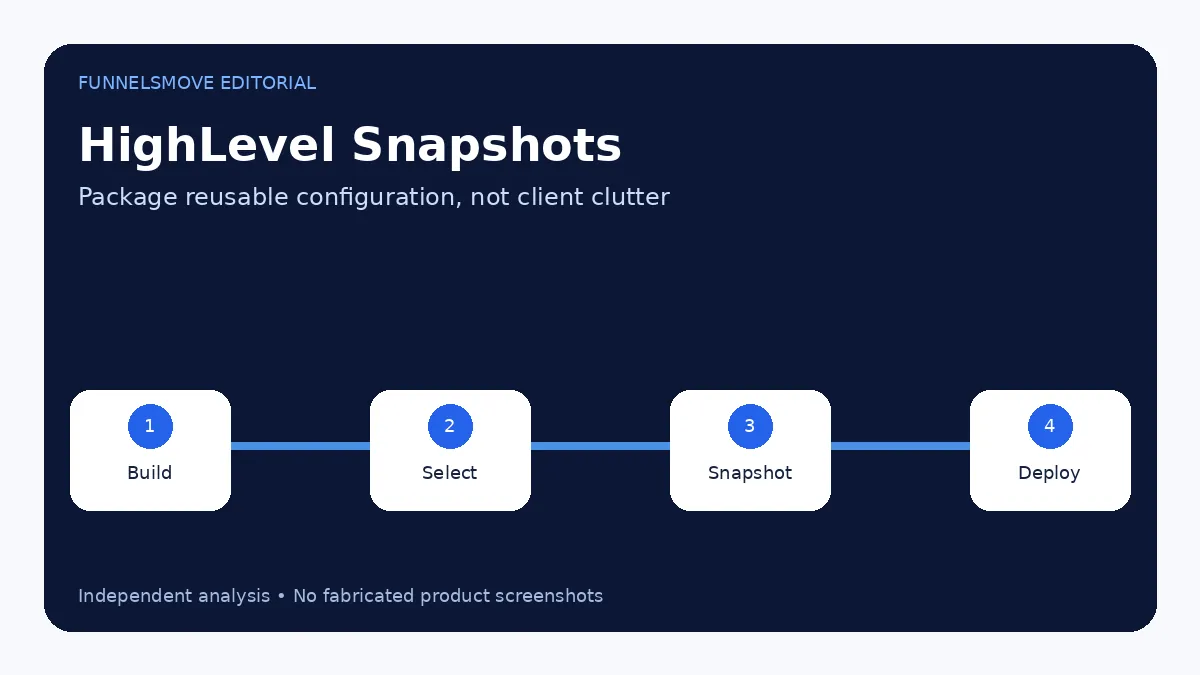
You do not build a snapshot from nothing. You first configure a sub-account, then create a snapshot from that account. This makes snapshots especially useful for agencies that repeat a similar setup across clients or verticals.
What a snapshot can include
HighLevel lets you select the assets to include rather than always copying everything. That matters because a good snapshot should contain repeatable structure, not client-specific clutter. Typical reusable assets include funnel structures, workflows, calendars, forms, custom values and other configuration.
Before capturing a snapshot, remove private test data, client-specific claims, outdated links and secrets that should not travel to another account.
How to create a HighLevel snapshot
HighLevel’s current flow is Agency View → Account Snapshots → Create New Snapshot. You name the snapshot, select the source sub-account, choose which assets to include and create it. If some asset categories fail to load, current documentation describes a retry option.
Choose a stable source account. A snapshot built from a messy client workspace simply reproduces that mess faster.
How snapshots are used across sub-accounts
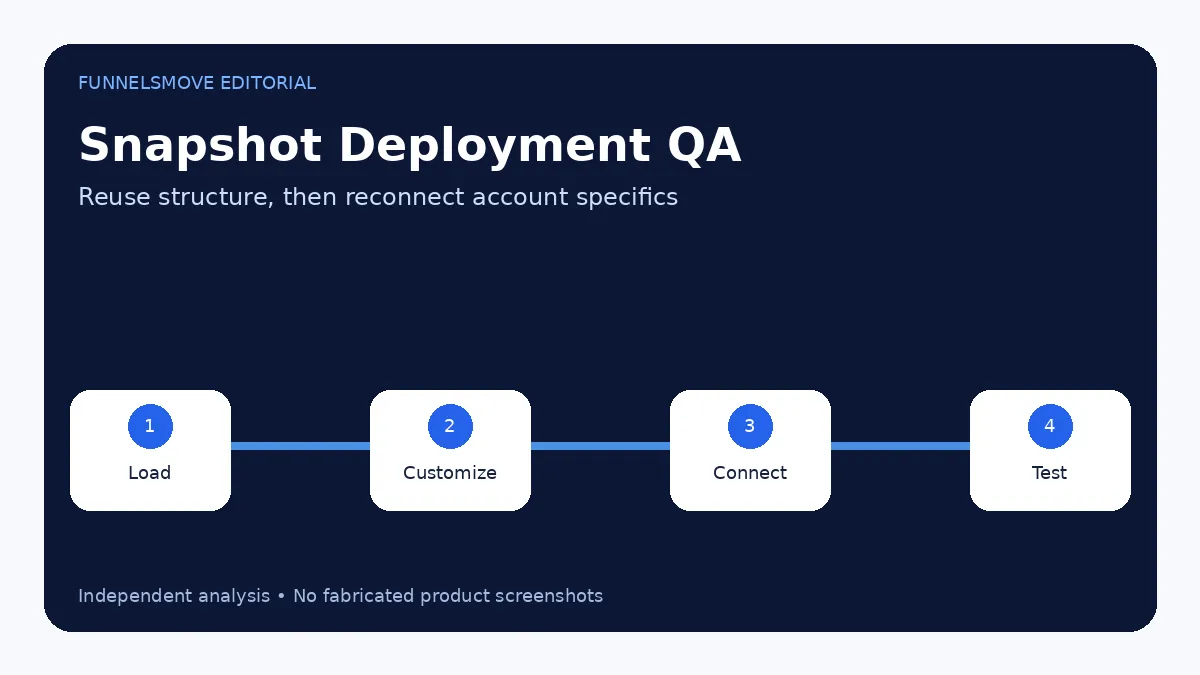
Snapshots are designed to accelerate deployment. An agency can load a standardized setup into a new sub-account, then customize branding, domains, phone/email configuration, products, calendars and client-specific copy.
Do not assume every integration credential or account-specific setting should transfer unchanged. Treat snapshot deployment as a starting configuration and run a QA checklist afterward.
Why agencies use snapshots
Snapshots reduce repetitive setup and improve consistency. A home-services agency might maintain one base snapshot with lead capture, pipelines and follow-up, then customize it for each client. A vertical SaaS offer can use a snapshot as part of its standardized account provisioning.
The value is operational repeatability, not a promise of marketing performance. A copied funnel still needs an offer, local details, compliant messaging and accurate integrations.
Can snapshots be sold?
HighLevel’s 2026 documentation describes selling snapshots through the App Marketplace, including one-time and recurring pricing models and IP-protection options. That creates a commercial use case for agencies with well-designed reusable configurations.
If you sell a snapshot, document what it includes, what still requires setup and which third-party costs are not included. Avoid implying that importing the snapshot guarantees leads or revenue.
Snapshot QA checklist
- Use a clean source sub-account.
- Select only reusable assets.
- Remove client-specific text and private data.
- Document required integrations.
- Load into a test sub-account first.
- Check workflows, domains, calendars, products and forms.
- Test the full lead journey after import.
For the broader implementation sequence, see how to use HighLevel.
Version snapshots like deployable assets
A snapshot can become a dependency for many client accounts, so use clear version names and change notes. If a workflow or form structure changes materially, create a new tested version rather than silently overwriting the reference without documentation.
Keep a small staging sub-account where snapshot updates can be loaded and tested before they reach new clients.
What should not be standardized blindly
Client-specific legal text, testimonials, phone numbers, domains, payment accounts, sending identities, offers and local claims should be reviewed after deployment. The whole point of a snapshot is to standardize reusable infrastructure without erasing the differences that make each client setup accurate.
Agency efficiency improves when the snapshot contains the repeatable 80 percent and the onboarding checklist handles the remaining 20 percent.
Evaluate HighLevel for your workflow
Use the current trial and plan details to check whether the platform fits your real lead-generation, CRM and automation workflow.
Visit HighLevel (opens in a new tab)Sources checked
- Creating New Snapshots (opens in a new tab)
- Selling Snapshots on the App Marketplace (opens in a new tab)
Research checked on September 13, 2026. HighLevel changes features, limits and pricing regularly; verify time-sensitive details before purchase or implementation.
FunnelsMove Editorial Team researches official product documentation, current pricing and independent user feedback. We do not claim hands-on testing unless explicitly stated.