Simvoly for Agencies, Marketers and SaaS Founders
Assess Simvoly for agencies, marketers and SaaS founders: client delivery, white labeling, resale economics, workflows, limits and alternatives.
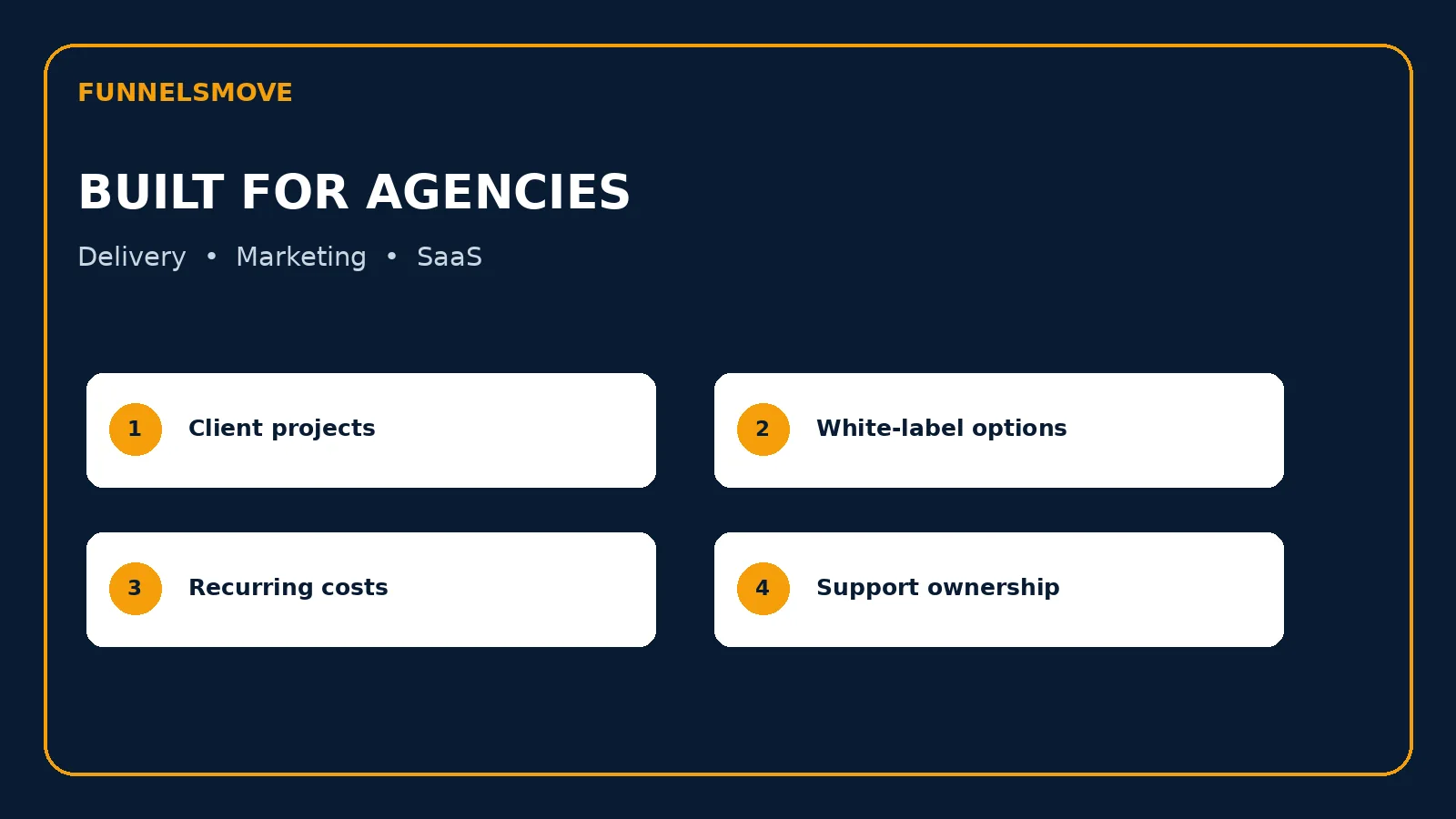
Which agency business model are you building?
An agency selling completed websites is not operating the same business as a marketer building campaigns or a founder reselling self-service software. Simvoly markets its white-label platform to all three audiences, but each should evaluate a different operational workflow.
A done-for-you agency needs repeatable production, client approval and maintenance. A marketing team needs campaigns, lead capture, attribution and follow-up. A SaaS-style reseller needs onboarding, branded access, subscriptions and support. Choose the primary model before comparing plans or templates.
Done-for-you client websites and funnels
Simvoly's white-label materials describe the ability to create and duplicate templates, projects and pages. That can help agencies standardize delivery across similar clients, but the actual time savings depend on how reusable the design and integrations are.
Build a sample client site with a homepage, service page, form, mobile navigation and reporting. Then duplicate the project and replace branding and content. Track which tasks are truly reusable and which still require manual configuration, such as domain connections, payment accounts and third-party integrations.
Marketing teams and conversion campaigns
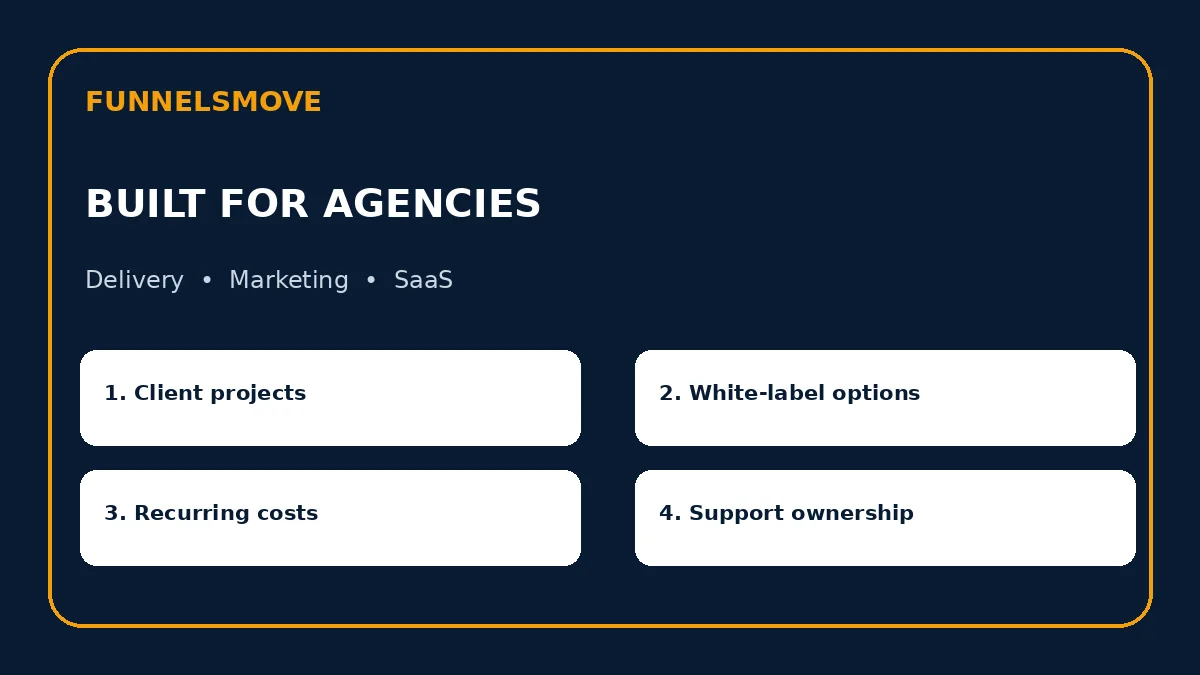
For marketers, the practical value is connecting landing pages, funnel steps, CRM contact records and campaigns. Simvoly offers funnel analytics, A/B testing and email automation alongside websites. A marketing team should evaluate those functions together rather than treating them as independent feature checkboxes.
Create a real campaign path from ad or email to landing page, form, follow-up and sales action. Test source tracking, consent, reporting and what happens when the same lead submits twice. If your organization already uses a mature CRM or marketing automation platform, integration quality may matter more than replacing it.
SaaS founders and white-label self-service
Simvoly's current white-label positioning includes custom branding, a branded domain, platform skins and a model in which customers select designs and manage their own projects. This can support a software-resale proposition, but branding the interface is only one part of running a SaaS-like business.
A founder must also design billing, plan boundaries, onboarding, user permissions, account recovery, customer support and offboarding. Test a complete customer lifecycle, including failed payment and cancellation. Do not assume every subscription or billing behavior is automatic simply because the platform markets a self-service model.
White-label branding and customer trust
Simvoly describes custom logos, domains, styling and, on relevant tiers, platform skins and other branded materials. Review which customer-facing screens can be branded and which may still expose a vendor dependency. If the customer relationship is yours, make support and privacy responsibilities clear.
Avoid implying that a white-label platform is independently built or hosted by your company. Customers should understand who provides their service and how their data is handled, even when the underlying technology is supplied by another vendor.
Project economics and pricing structure
As of October 12, 2026, Simvoly's current white-label page lists WL Basic at $69 monthly or $59 per month billed annually, WL Advanced at $149/$129, and WL Ultimate at $497/$429. The published plans include an initial project, with additional projects charged separately by type and optional add-ons. These figures are time-sensitive and should be verified at checkout.
A sustainable resale model requires a spreadsheet with the platform subscription, each active project type, extra capacity, payment processing, staff support time and churn. Do not compare a single headline white-label price against expected client revenue. Include the cost of onboarding and maintaining every client, not just the cost of hosting a site.
Permissions, client access and ownership
Define who owns the domain, payment processor, contact records, design assets and third-party integrations before a client is onboarded. A client should not lose access to its essential business data because one agency employee leaves. Document how permissions are assigned and revoked.
Test the exact client role on a sample project. Confirm that a client can update appropriate content without changing global billing, other client projects or critical integrations. Keep a handover checklist for agencies that build and transfer sites.
Reusable templates and onboarding systems
Create a limited set of templates for the client types you actually serve. A local service provider, course creator and ecommerce business have different content, checkout and reporting needs. Overgeneralized templates can make delivery slower when every page requires rework.
A useful onboarding system captures business goals, approved copy, imagery, domain access, contact destinations, analytics requirements and legal information. Make the client responsible for confirming facts and permissions rather than filling gaps with invented testimonials or compliance claims.
CRM, automation and integrations
Simvoly includes CRM and marketing capabilities, but agency clients may already use established CRMs, calendars or payment tools. Decide which system is the source of truth for contacts and orders. Duplicate records and inconsistent consent can undermine the apparent simplicity of an all-in-one stack.
Run an end-to-end test for one client: submit a lead, inspect the record, trigger follow-up, and confirm notifications and reporting. Test integration failures and define who receives the alert. A system is only maintainable when support staff know how to diagnose the complete workflow.
Support, security and offboarding
Reselling software creates ongoing obligations. Document account recovery, domain changes, subscription changes, access permissions, incident handling and how a departing client retrieves important records. Avoid giving a client more administrative access than necessary, but do not make basic data portability unnecessarily difficult.
The agency should maintain a support knowledge base and a clear escalation route to the platform vendor. Test routine problems before selling the service widely, including a missing form notification and an expired integration credential.
When Simvoly is not the best agency choice
An agency specializing in highly customized software, complex enterprise governance or large-scale commerce may prefer a composable stack or a specialist platform. A marketer already satisfied with its CRM and email stack may need only a landing-page builder. A small freelancer may not benefit from the cost and operational responsibilities of white labeling.
The decision should follow the hardest client requirement, not the largest advertised feature list. Compare migration cost, client experience, available technical support and long-term ownership.
A 30-day pilot plan
In week one, define one representative client type and configure a sample project. In week two, create the website or funnel, CRM workflow and reporting. In week three, have another team member perform routine updates and simulate client onboarding. In week four, review support requests, pricing assumptions, permissions and offboarding.
Keep a written decision record: what worked, what needed workarounds, what was not tested, and which plan limits are likely to matter. This is a suggested evaluation process, not a claim that FunnelsMove ran such a pilot.
Official sources and research basis
Facts checked October 12, 2026. This guide is based on official product documentation, not firsthand testing. Simvoly white-label platform (opens in a new tab) · Simvoly pricing (opens in a new tab) · Simvoly agency builder (opens in a new tab)
Related Simvoly guides
Simvoly platform overview · Simvoly white-label capabilities · Simvoly white-label pricing · Simvoly versus GoHighLevel
Explore Simvoly
Review current features and plan eligibility directly before choosing a configuration.
Explore Simvoly (opens in a new tab)