Systeme.io: Platform Overview, Features and Fit
A practical overview of Systeme.io for creators and small online businesses evaluating funnels, email, automation, courses and digital selling in one platform.
What is Systeme.io?
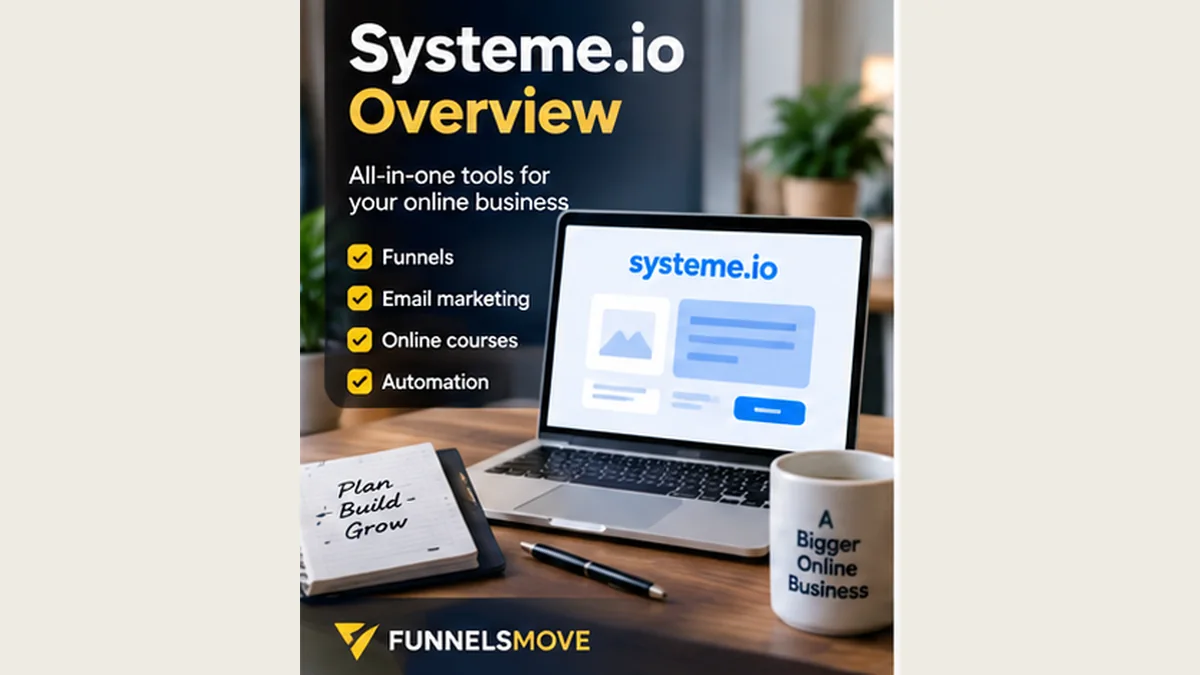
Systeme.io is an all-in-one online-business platform that combines sales funnels, email marketing, automation, courses, websites, affiliate management and other selling tools in one account. Its main appeal is consolidation: a creator or small business can capture a lead, follow up by email, sell an offer and deliver a course without assembling several separate services.
The platform is particularly relevant to solo creators, course sellers and small online businesses that want a broad toolkit with a permanent free entry point. That does not mean it replaces every specialist product. A business with complex CRM, analytics, ecommerce or enterprise automation requirements should compare the depth of those specialist workflows before consolidating.
What can you run inside Systeme.io?
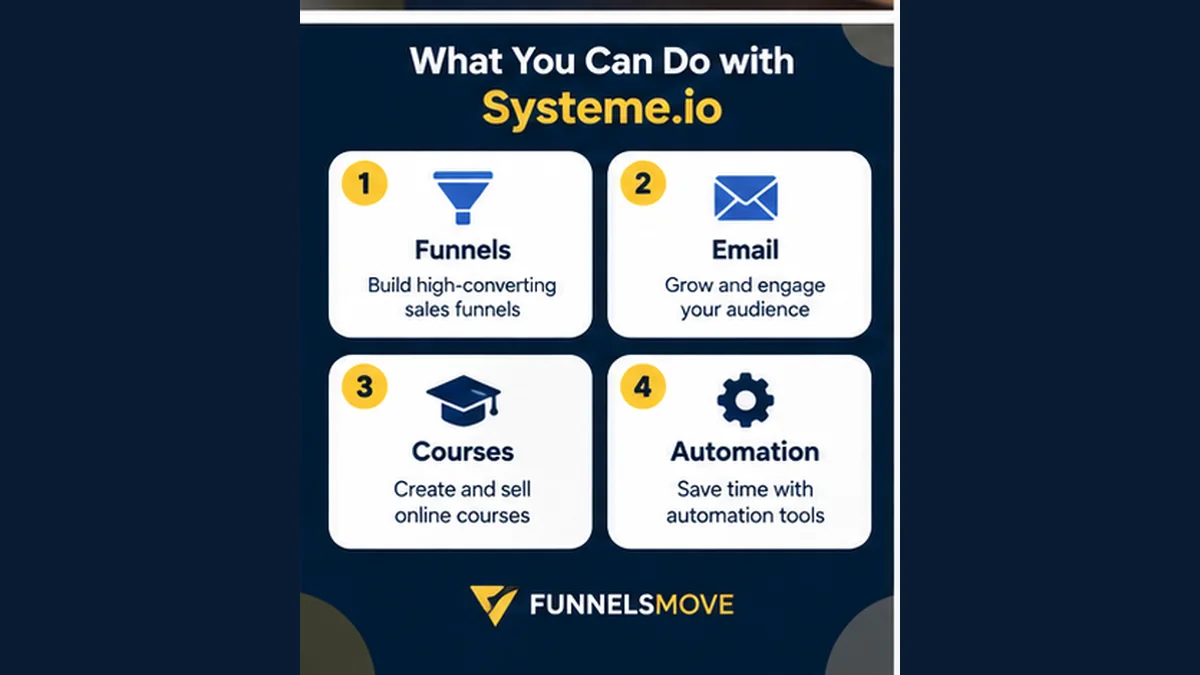
The current official feature overview (opens in a new tab) lists sales funnels, email marketing, a website builder, affiliate management, marketing automation, online courses, communities, booking calendars, pipelines, webinars and other tools. Funnels can connect opt-ins, sales pages, checkout and follow-up, while email and automation can respond to subscriber or buyer actions.
This breadth matters most when the tools need to share the same contact and purchase context. It matters less when your business already has specialist systems that work well and would be costly to replace.
Who is Systeme.io a good fit for?
Systeme.io is worth considering when your priority is to launch a relatively simple online offer with fewer moving parts. Examples include a creator selling a course, a consultant building a lead funnel, or a small digital-product business that needs landing pages, email sequences and checkout in one place.
It may be less suitable when a team needs a deeply customized CRM, a large app ecosystem, highly specialized ecommerce operations or complex multi-department governance. The right question is not whether Systeme.io has many features; it is whether its version of those features is deep enough for the workflow you actually operate.
Funnels, pages and checkout
The official funnel-builder page (opens in a new tab) describes a drag-and-drop funnel workflow with templates, payment connections, email automation, upsells and order bumps. Because funnel steps sit in the same platform as contacts and email, a purchase or opt-in can become an automation trigger without a separate connector.
For a simple creator funnel, that can reduce configuration. For an established business, migration deserves more scrutiny: recreate a real funnel, checkout, follow-up sequence and reporting requirement before deciding that feature overlap equals operational equivalence.
Email and automation
Systeme.io includes broadcast email, campaigns, tagging and automation. Its marketing automation page (opens in a new tab) describes trigger-and-action workflows that can respond to sign-ups, purchases and other events. This makes the platform useful for straightforward nurture, onboarding and fulfillment sequences.
Teams with sophisticated lifecycle marketing should map branching logic, data requirements, deliverability processes and reporting before replacing a dedicated email platform. Consolidation is valuable only when it preserves the controls you rely on.
Pricing and the free starting point
Systeme.io currently advertises a permanent Free plan and paid Startup, Webinar and Unlimited tiers. Limits vary by plan, so use our Systeme.io pricing guide for a decision-focused breakdown and verify the official pricing page (opens in a new tab) before purchasing because pricing and limits can change.
The free tier is useful for validating the editor and workflow before paying. A sensible trial is to build one complete customer journey rather than judging the platform from the dashboard alone.
Limitations and trade-offs
An all-in-one product creates convenience by standardizing many jobs inside one system. The trade-off is that a specialist product may offer more depth in a particular area. Businesses should pay special attention to CRM complexity, analytics, integration requirements, advanced email operations and migration effort.
Also consider portability. Before committing, document how contacts, domains, pages, products and automations would be exported or rebuilt if your requirements change later.
Where to go next
Start with Systeme.io pricing if cost and plan limits are the main constraint. Read Systeme.io integrations if you need the platform to coexist with an existing stack. If funnels are central to the decision, our Systeme.io vs ClickFunnels comparison focuses on operating model rather than feature-count marketing.
Explore Systeme.io
Use the official platform to verify the current workflow and plan limits against your own requirements.
Explore Systeme.io (opens in a new tab)A practical Systeme.io workflow
A simple creator workflow can begin with a landing page that offers a lead magnet, add the subscriber to a contact list, apply a tag, start an email campaign, present a paid offer and then grant access to a course after purchase. Keeping those steps in one platform can make the handoffs easier to understand because fewer third-party connections sit between the opt-in and delivery.
That does not remove the need for planning. Define the event that starts each automation, the data that must be stored, the messages a contact receives and what happens when a payment fails or a subscriber changes status. A compact stack can still become confusing if the business logic is undocumented.
How to evaluate Systeme.io before migrating
Build one representative customer journey before moving domains or importing a large list. Use a real page structure, a test product, your normal email sequence and the payment provider you intend to use. Then check mobile editing, form behavior, tagging, checkout, post-purchase access and the reports you need to operate the business.
Also inventory what would remain outside Systeme.io. Accounting, advanced analytics, customer support, specialist CRM or ecommerce operations may still live elsewhere. The best outcome is not necessarily “one tool for everything”; it is a stack with clear ownership of each job and reliable handoffs between systems.