Simvoly Courses: Learning Features and Fit
Explore Simvoly courses, including learning management, progress tracking, drip content, communities, video, memberships, selling and practical course setup.
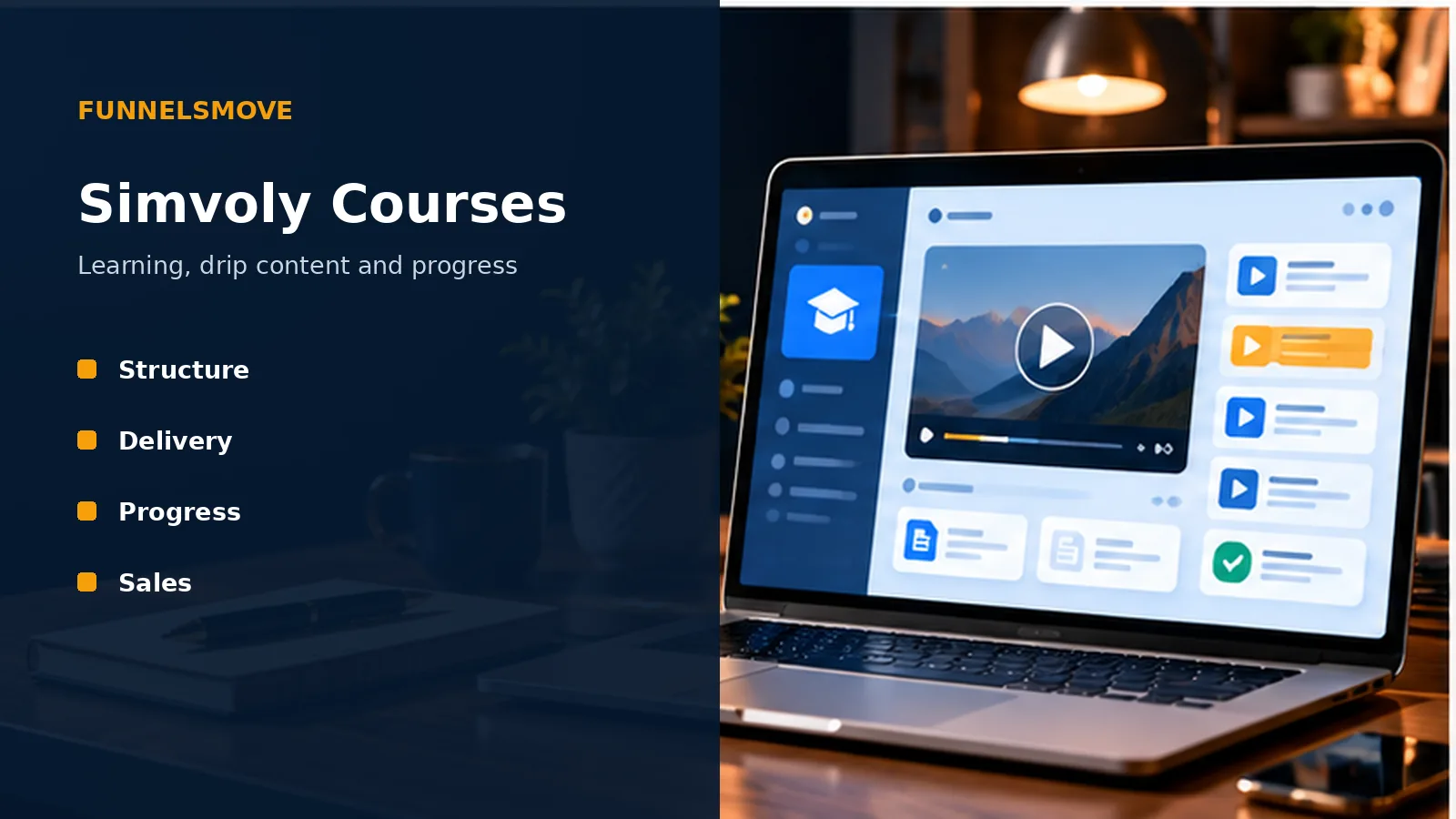
What does the Simvoly course platform provide?
Simvoly positions courses as part of a broader community and business platform rather than a standalone learning-management product. Current official materials describe course creation, learning management, completion tracking, drip content and scheduled release.
Courses can sit alongside websites, funnels, communities, CRM, ecommerce and hosted video. That can simplify a creator stack when those components need to work together.
The keyword plan also consolidates searches for Simvoly funnel and website academy material here. Those queries are best handled as learning/course intent rather than separate thin pages.
Plan the learning structure first
Define the transformation or outcome before building modules. Break the material into a sequence that a learner can realistically complete, then decide where video, text, downloads, discussion or assessments add value.
Keep navigation predictable. Learners should know what they have completed, what comes next and where to ask for help. A large library is not automatically a good course if the path through it is unclear.
Separate evergreen lessons from announcements or community discussion so important teaching material does not disappear inside a feed.
A practical course launch framework
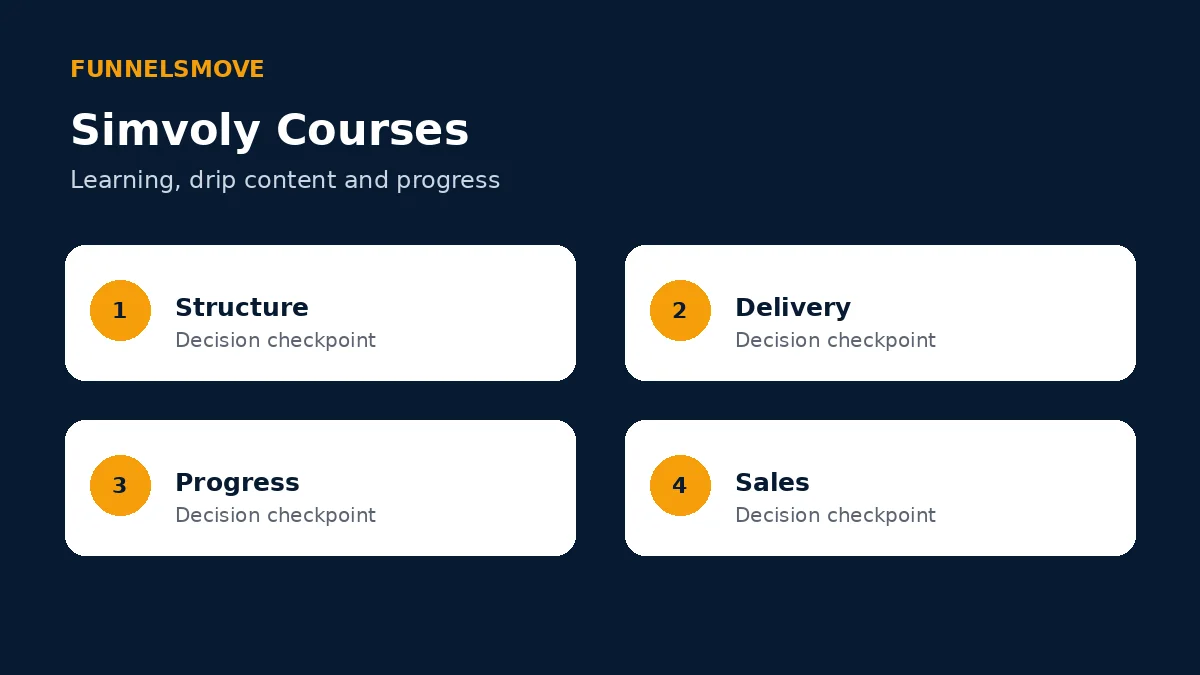
Use four checkpoints: structure the curriculum, configure delivery and access, connect the sales and member journey, then test progress and support flows before enrollment opens.
Run the course with a test learner account. Verify lesson order, access restrictions, media playback, progress behavior, emails and the purchase-to-access handoff.
Progress tracking, drip content and release schedules
Simvoly’s current community/course page highlights learning management and progress tracking, plus drip content and scheduled release. These controls can help pace a program or prevent every lesson from appearing at once.
Choose pacing for a learning reason rather than simply because drip functionality exists. Some reference courses work better with immediate access, while cohort or guided programs may benefit from scheduled release.
Explain the release model before purchase so learners know whether content is immediately available or delivered over time.
Courses and community together
Simvoly connects courses with community features such as discussions, walls and reactions. Community can support accountability and peer learning when it has a clear purpose.
Create discussion prompts around meaningful milestones rather than opening many empty channels. Decide whether support questions belong in a community, direct support channel or lesson comments.
For access and moderation details, see our Simvoly communities and memberships guide.
Video and content delivery
Simvoly’s wider platform currently includes video hosting, and its community/course positioning connects media with learning experiences. Before uploading a large library, verify current plan limits and the media workflow appropriate to your project.
Compress video sensibly, use clear titles and provide supporting text or downloadable resources where they improve accessibility and learning.
Test playback on mobile connections and common devices. Course quality depends on delivery reliability as much as the visual lesson builder.
Selling courses and access
Simvoly’s membership materials connect courses with one-step checkout, subscriptions, bump offers and upsells. These tools can support course sales, but the commercial path should remain understandable to the learner.
Make the core purchase clear before adding optional offers. Verify pricing, billing interval, refund or cancellation information, confirmation messages and access provisioning.
If you use funnels for enrollment, our Simvoly funnel builder guide covers funnel testing and analytics.
What about the Simvoly Academy searches?
Simvoly operates official learning resources for building websites and funnels. The keyword plan groups “simvoly funnels Academy” and “simvoly website Academy” with course-platform intent instead of creating separate editorial pages for navigational academy queries.
Readers looking specifically for official training should use Simvoly’s current academy or learning resources. FunnelsMove should not reproduce or imply ownership of that training.
This guide instead evaluates the product capability for creating and delivering your own learning experience.
Who are Simvoly courses suited to?
Simvoly courses can fit creators, educators and membership businesses that value having learning, community, websites, funnels and selling tools in one environment. Agencies may also value the white-label course capability.
A specialist LMS may be preferable when accreditation, complex assessments, enterprise reporting or other specialized learning requirements dominate the project. Document those needs before choosing a platform.
Evaluate the complete learner journey, not only lesson creation: discovery, checkout, onboarding, learning, support, completion and retention.
Bottom line on Simvoly courses
Simvoly combines course delivery, progress tracking and scheduled content with community and commerce. Its strongest fit is an integrated creator or membership workflow; course design, support and learner experience still require deliberate planning beyond the software.
Official sources checked
Simvoly community and course builder (opens in a new tab) · Simvoly memberships and courses (opens in a new tab) · Simvoly Academy (opens in a new tab)
Course quality-assurance checklist
Review every lesson as a learner before launch. Check titles, sequence, downloads, links, video playback and mobile presentation, then confirm that progress and release rules behave as intended.
Test the commercial handoff separately: purchase, confirmation, account creation, course access and any onboarding messages. A course can be well designed yet still create support problems if access provisioning is unclear.
Set a maintenance schedule for outdated lessons and broken resources. Course content is an ongoing product, especially when it teaches software, marketing processes or other subjects that change over time.
Explore Simvoly
Review the current product and plan details directly before deciding whether Simvoly fits your workflow.
Explore Simvoly (opens in a new tab)